
What Is Export Customs Clearance? The 4 Steps and Korea's 30-Day Loading Deadline

Exporting is not finished the moment goods are loaded onto a ship or plane. You must file an export declaration with customs, and the goods can only leave officially once that declaration is accepted. This gateway is export customs clearance. Unlike import clearance there is no duty to pay, but acceptance comes with a deadline: the goods must be loaded within a set period.
This guide helps exporters understand the full flow of clearance and the documents involved, so a missed loading deadline never cancels an accepted declaration.
What Is Export Customs Clearance?
Export customs clearance is the process of declaring the goods you intend to export to the head of customs, having customs review and accept the declaration, and then loading the goods onto a means of transport. You file the export declaration with the customs office that has jurisdiction over where the goods are located, and the declaration is transmitted through the Korea Customs Service's electronic clearance system, UNI-PASS.
The biggest difference from import clearance is tax. Korea does not levy duty on exported goods, so the duty-payment step found in import clearance does not exist in export clearance. Instead, meeting the loading deadline after acceptance is the key.
The 4 Steps of Export Clearance
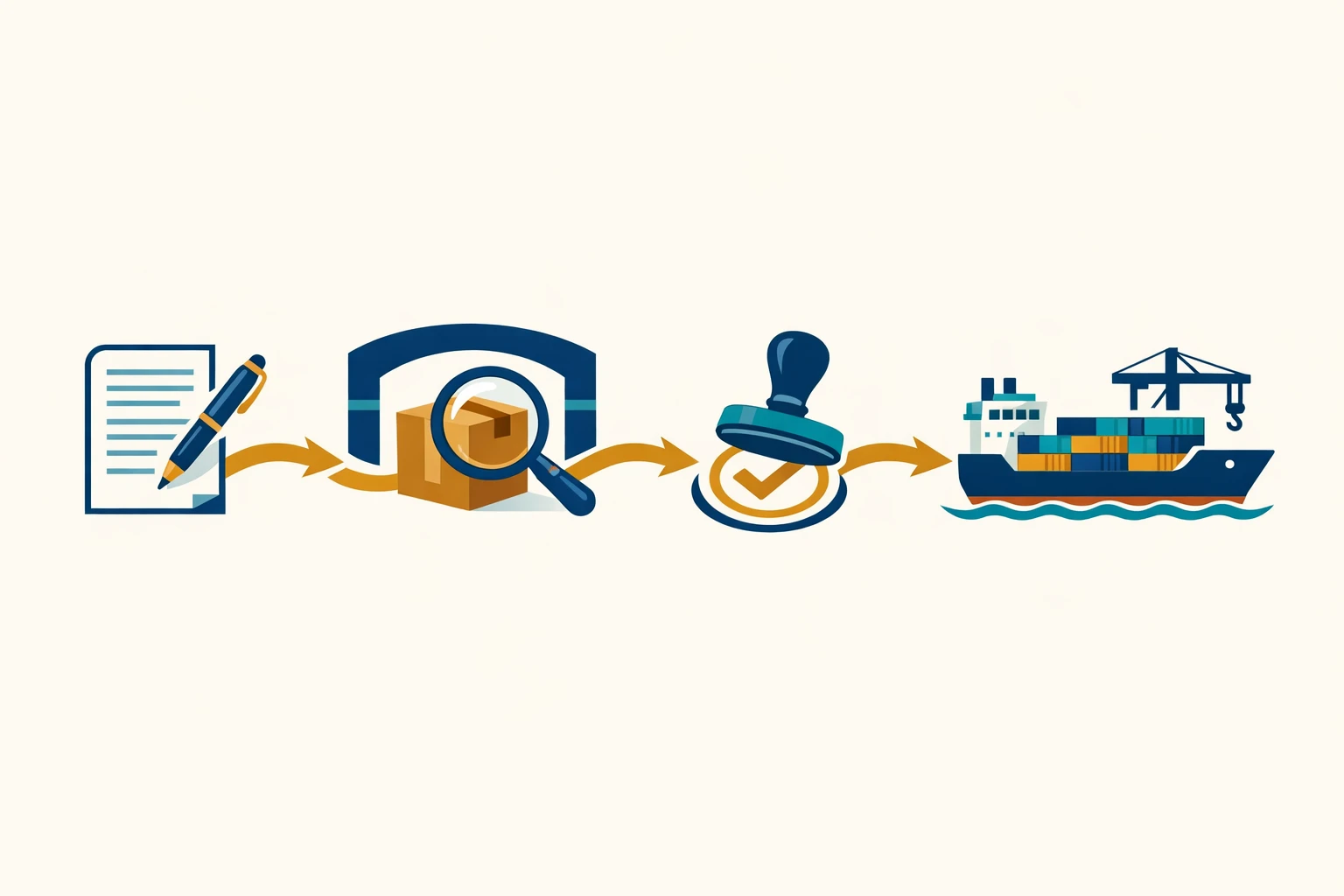
| Step | Details |
|---|---|
| 1. Export declaration | The shipper or a customs broker transmits the export declaration to the customs office with jurisdiction over where the goods are located |
| 2. Review and inspection | Automated screening by the risk-profiling system, plus document review and physical inspection when required |
| 3. Acceptance | If no risk flag, immediate acceptance and issuance of the export declaration certificate |
| 4. Loading | Loading completed onto the means of transport within 30 days of acceptance |
Documents Needed for an Export Declaration
- Export declaration form: the base document transmitted through UNI-PASS
- Invoice: transaction details and price
- Packing List: item, quantity, weight
- Export requirement documents: permits, approvals, and the like for items subject to customs confirmation
- HS code classification support: materials backing the classification and declared value
Documents required at the time of filing are lighter for exports than for imports, but customs can request supporting documents during review or inspection. So it is safer to have your HS code classification basis and requirement documents ready in advance.
The Loading Deadline: 30 Days From Acceptance
The most commonly missed item in export clearance is the loading deadline. Goods with an accepted export declaration must complete loading onto a means of transport traveling to or from a foreign country within 30 days of the acceptance date (Customs Act article 251).
If you fail to load within the deadline, the head of customs may cancel the acceptance of the export declaration and a fine may be imposed. If your shipping schedule is expected to slip, apply to customs for an extension before the loading deadline passes; extensions are approved within a one-year range.
Export Clearance and Duty Drawback
Acceptance of the export declaration is also the starting point for duty drawback. Duty paid when importing raw materials for export can be refunded after those goods are exported, and the export declaration certificate is the proof of that export. Filing deadlines and methods are covered in detail in the duty drawback guide.
How to Clear Faster
- Prepare documents in advance: finalize the invoice, packing list, and requirement documents before filing
- Confirm the HS code early: use classification to identify export requirements and the basis for declared value ahead of time
- Check requirement-bound items: if subject to customs confirmation, obtain permits and approvals in advance
- Align the loading schedule with the filing timing: time the filing so loading finishes within the 30-day deadline
- Work with a customs broker: review classification, requirements, and drawback eligibility with an expert in advance
Export clearance delays lead to slipped shipping schedules and a blown loading deadline. Finishing documents and requirements before filing, then aligning them with the loading schedule, is the surest approach.
This guide is for general information. Requirements and procedures by item, and the criteria for extending the loading deadline, vary by Korea Customs Service notice and individual circumstances. It reflects the time of publication; confirm the latest standards before you actually file.
Frequently asked questions
What are the steps of export customs clearance?
It proceeds in four steps: export declaration, review and inspection, acceptance, and loading. You file the export declaration through UNI-PASS with the customs office that has jurisdiction over where the goods are located, and once customs accepts it you receive the export declaration certificate and load the goods within 30 days of acceptance.
Do you pay duty when exporting?
Korea does not levy duty on exported goods. So the duty-payment step found in import clearance does not exist in export clearance; instead, meeting the loading deadline after acceptance is what matters.
By when must you load after the export declaration is accepted?
You must complete loading onto a means of transport traveling to or from a foreign country within 30 days of the export declaration acceptance date (Customs Act article 251). Miss the deadline and the head of customs may cancel the acceptance and a fine may be imposed; if needed, you can apply for an extension within a one-year range before the deadline.
What documents does an export declaration require?
Along with the export declaration form (the base document), an Invoice and a Packing List are standard; if the item is subject to customs confirmation you add export requirement documents, plus materials supporting the HS code classification and declared value.


