
Customs Duty Drawback in Korea: You Have 5 Years to Claim, Not 2

A surprising number of companies export goods and never claim their customs duty drawback. The reason is usually one of two. They did not know they were eligible, or they missed one of the deadlines. Korea sets two: a 5-year window from export to file the claim, and a 2-year look-back that decides which imported raw materials qualify. Once a refund lapses, it does not come back.
This guide is for practitioners at exporting and manufacturing companies that import raw materials, turn them into products, and sell them abroad. It covers everything from "are we eligible?" to "how do we file?" so you never have to search again.
What Is Customs Duty Drawback? (It Is Not VAT Refund)
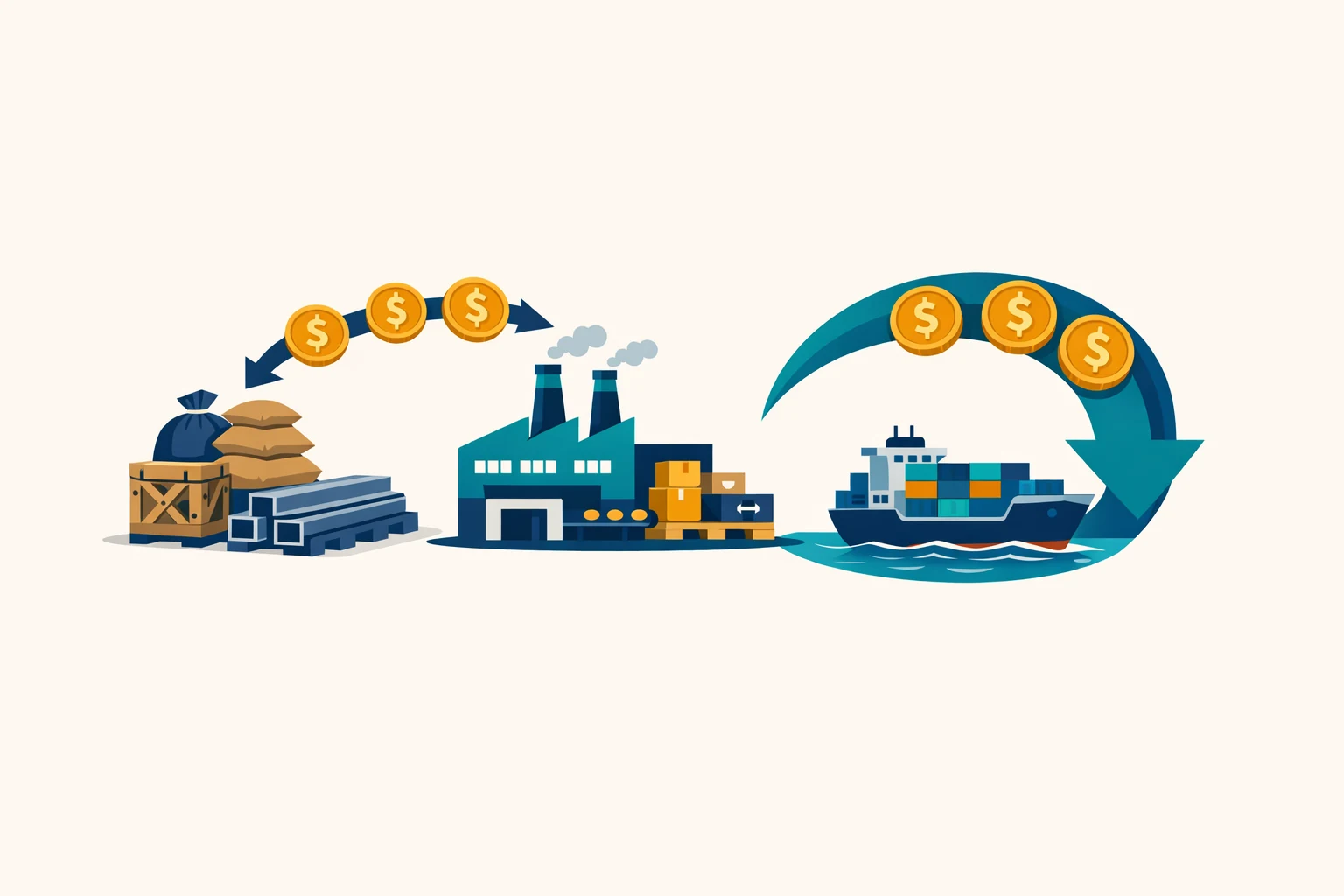
Customs duty drawback is an export-support scheme that returns the customs duty paid on imported raw materials to the exporter (or producer) once the goods made from those materials are exported. In Korea it is governed by the Act on Special Cases Concerning the Refund of Customs Duties, etc. Levied on Raw Materials for Export (the Refund Special Act), and administered by the Korea Customs Service.
The core is the link: "import duty was paid, and that raw material went into an exported product." It does not apply to goods consumed domestically.
A common point of confusion: "customs duty drawback" and "VAT refund" are entirely separate. A VAT refund returns input VAT because exports carry a zero rate (0%), while duty drawback returns the customs duty on imported raw materials. You can receive both, but the filing channels and governing laws differ.
Individual vs Fixed-Rate Drawback: Which Should You Choose?
There are broadly two methods of duty drawback. Which one you can use depends on company size and your ability to prepare documentation.

| Category | Individual drawback | Fixed-rate drawback |
|---|---|---|
| Calculation method | Actual duty paid computed per raw material | Based on FOB value on the export declaration, computed in bulk using the fixed-rate schedule |
| Consumption calculation | Required (quantity per type of raw material) | Not required |
| Proof of duty paid | Required (import tax invoice, base material tax certificate, etc.) | Not required |
| Accuracy | Precise, based on actual duty paid | Approximate, per the schedule |
| Best suited for | Companies with high duties and volumes | Small and mid-size manufacturers and exporters reducing paperwork |
Fixed-rate drawback skips consumption calculation and proof of payment, applying the refund-rate schedule on a "per 10,000 KRW of FOB value" basis from the export declaration. The light paperwork makes it popular with small and mid-size manufacturers and exporters. Note that the fixed-rate drawback schedule is set by public notice from the Commissioner of the Korea Customs Service and is updated each year by item (HS code), so check the latest notice in effect at the time you file.
Individual drawback determines the quantity of each type of raw material actually consumed in producing the exported goods (the "consumption"), then calculates the duty paid on importing those materials item by item. It takes more effort, but for items with heavy duty the refund is precise and larger.
The decision in one line: if the raw-material duty burden is small and you want to simplify paperwork, use fixed-rate drawback; if the duty is heavy and you want to recover exactly what is owed, use individual drawback. When in doubt, simulate both and take the larger. That is standard practice.
The 5-Step Duty Drawback Procedure
- Confirm eligibility: verify that the imported raw material was actually consumed in the exported goods and that it is a drawback-eligible material.
- Choose the method: pick whichever is more favorable, individual or fixed-rate drawback.
- Prepare consumption data and documents: for individual drawback, prepare the consumption calculation and proof-of-duty documents; for fixed-rate, prepare the export declaration.
- File the claim: submit to customs through the Korea Customs Service electronic clearance system (UNI-PASS).
- Receive the refund: after review, the refund is paid to the designated account.
Required-Document Checklist
- Export declaration certificate (proof of export)
- Import declaration certificate / import tax invoice (proof of raw-material import and payment, individual drawback)
- Base material tax certificate or split certificate (domestically sourced raw materials, individual drawback)
- Supporting data for the consumption calculation (individual drawback)
- Business registration certificate, refund deposit account
For fixed-rate drawback, the list above is greatly simplified around the export declaration.
Two Deadlines: 5 Years to Claim, 2-Year Look-Back
Korea attaches two deadlines of different kinds to duty drawback. Confuse them and you leave money behind.
- The claim deadline is 5 years from the date the goods are provided for export. File with customs within that window. It used to be 2 years but was extended to 5 by amendment.
- The look-back period is 2 years. Only raw materials imported within 2 years before the export date qualify for drawback. If more than 2 years pass between importing a material and exporting the finished goods, the duty on that material is no longer refundable.
The widely repeated "2 years" is not the claim deadline; it is the look-back period between import and export. The claim itself can be filed up to 5 years after export. The more export transactions a company has, the easier it is to let old cases slip, so we recommend reviewing pending drawback cases every quarter.
Do Not Confuse This With FTA or VAT Refunds
In import-export practice the word "refund" gets used for three different things. They differ in nature, so keep them straight.
| Type | What is returned | When |
|---|---|---|
| Duty drawback (Refund Special Act) | Duty on imported raw materials used in exported goods | File within 5 years of export (2-year look-back) |
| FTA preferential-tariff post-application | The gap between the FTA preferential rate not claimed at import and the general rate | Within a set period after import (per agreement, typically 1 year) |
| VAT refund | Input VAT under the export zero rate | At VAT filing |
FTA post-application applies when you could not present a certificate of origin at import and so missed the preferential tariff; you later meet the requirements and recover the difference. It runs on a different track from duty drawback.
Refunds Practitioners Often Miss
- Domestically sourced raw materials can also be eligible: with a base material tax certificate, the duty on domestically purchased raw materials can be linked into your drawback claim.
- Sticking to fixed-rate and losing out: for an item with heavy duty, habitually using only fixed-rate drawback can leave you with less than individual drawback would yield.
- Deadline mismanagement: the two deadlines stressed above (5-year claim, 2-year look-back). Cases that pass the claim deadline lapse first.
- Poor consumption tracking: the accuracy of individual drawback hinges on the quality of the consumption calculation.
This guide is for general information. Actual filing may vary with the latest Korea Customs Service notices (customs.go.kr) and the specifics of each case. For concrete decisions, confirm with a licensed customs broker or the customs refund department.
Frequently asked questions
What is the deadline to claim customs duty drawback in Korea?
You must file within 5 years of the date the goods are provided for export. The commonly cited 2 years is not the claim deadline but the look-back period: only raw materials imported within 2 years before the export date qualify.
Which is better, individual or fixed-rate drawback?
If the duty burden is heavy and you want to recover it precisely, use individual drawback; small and mid-size companies reducing paperwork typically use fixed-rate drawback. The safe approach is to simulate both and take the larger.
Can I receive both customs duty drawback and a VAT refund?
Yes. They are separate schemes with different governing laws and channels, so you can receive each if you meet the requirements.
Is duty drawback available even if I bought the raw materials domestically?
With a base material tax certificate and similar documents, the duty embedded in domestically sourced raw materials can be linked into your drawback claim. Check the document requirements.
Where do I check the fixed-rate drawback rate?
In the fixed-rate drawback schedule published by the Commissioner of the Korea Customs Service, by item (HS code). It is updated each year, so use the latest notice in effect at the time you file.


