
What Is a TMS (Transportation Management System)?

Manage transport across spreadsheets, email, and phone calls, and you lose the single view that matters: where each shipment is, what is delayed, and why a cost came out the way it did. A TMS solves that with a system.
This guide helps teams standardizing and automating transport understand what a TMS does and what to look for.
What Is a TMS?
A TMS (Transportation Management System) manages the planning, execution, tracking, and settlement of transport in one system. It unifies scattered work, from quoting and booking to shipment tracking, documents, and freight settlement.
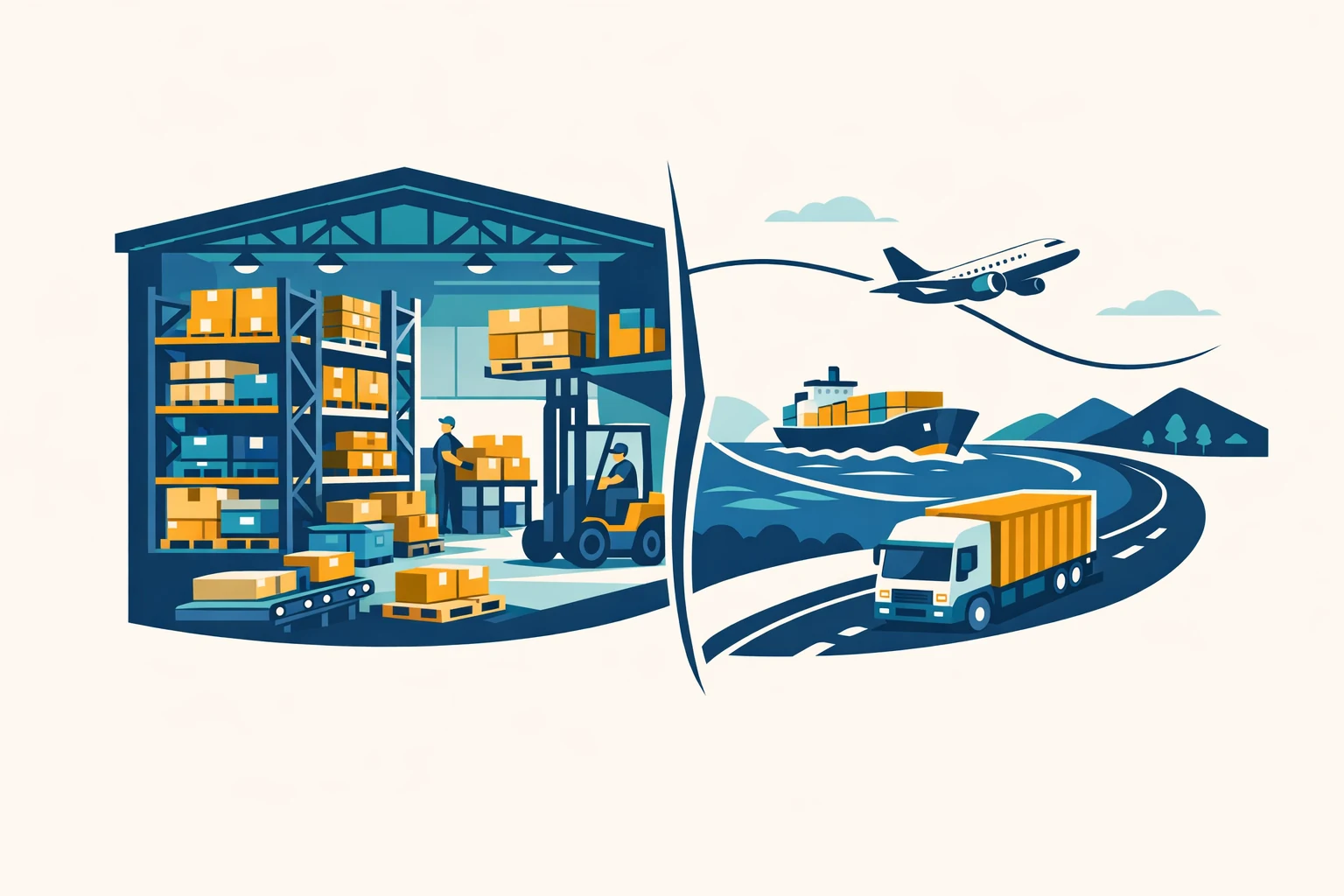
TMS vs WMS
| TMS | WMS | |
|---|---|---|
| Manages | Transport (movement) | Warehouse (storage) |
| Core functions | Booking, routing, tracking, freight settlement | Inbound/outbound, inventory, picking, locations |
| Answers | "Where is my cargo, and when does it arrive?" | "What is where, and how much?" |
The two are complementary: a WMS runs inside the warehouse, a TMS runs everything moving outside it.
Core TMS Functions
A TMS unifies scattered transport work into:
- Quoting and booking: comparing lanes and rates, and reserving space
- Visibility and tracking: real-time cargo location and status
- Documents: managing B/Ls, invoices, and transport paperwork
- Freight settlement: reconciling charges and automating settlement
What a TMS Improves
- Visibility: track every shipment, entity, and lane in real time on one screen
- Cost control and transparency: standardize and compare freight, and reduce settlement errors
- Automation: handle repetitive booking, documents, and status updates automatically
- Proactive risk management: prevent exposure to delays, exceptions, and D&D (demurrage/detention) with early alerts
What to Check When Choosing a TMS
- Scope of visibility: does it show multi-country, multi-entity, multimodal shipments on one screen?
- Integrations: does it connect to carriers, customs brokers, and your ERP?
- Level of automation: how much of documents, alerts, and settlement is automated?
- Scalability: does it flex as volumes and lanes grow?
This guide is for general information. Actual features and deployment vary by product and operating environment. Confirm with a consultation.
Frequently asked questions
What is a TMS (Transportation Management System)?
Software that manages the planning, execution, tracking, and settlement of transport in one system, unifying work from quoting and booking to shipment tracking, documents, and freight settlement.
What is the difference between a TMS and a WMS?
A TMS manages transport (movement) outside the warehouse; a WMS manages storage and inventory inside it. A TMS answers 'where is my cargo and when does it arrive,' a WMS answers 'what is where and how much.' They are complementary.
What does a TMS improve?
Real-time visibility across all shipments, standardized freight and settlement transparency, automation of repetitive work, and proactive management of risks like delays and demurrage/detention.
What should I look for when choosing a TMS?
Scope of visibility across multi-country and multimodal shipments, integrations with carriers, customs brokers, and ERP, the level of automation for documents and settlement, and scalability as volumes grow.


