
What Is Fulfillment? Fulfillment vs 3PL Explained

As orders grow, packing and shipping eat the whole day, and once returns pile on, there is no time left for the actual business: product and marketing. Fulfillment takes that off your plate.
This guide helps online sellers weighing logistics outsourcing understand fulfillment and decide whether it fits.
What Is Fulfillment?
Fulfillment is a logistics service that handles the entire e-commerce order process, from storing products to order-level picking, packing, shipping, and returns. You focus on selling and product while the provider executes everything after the order.
Fulfillment vs 3PL
Fulfillment is a form of 3PL specialized for e-commerce. Within the broader concept of 3PL, fulfillment is optimized for handling individual online orders. See also 3PL vs fulfillment for the containment relationship and cost structure side by side.
| 3PL | Fulfillment | |
|---|---|---|
| Scope | Broad logistics (storage, transport, delivery) | Specialized for per-order handling |
| Focus segment | Includes B2B bulk logistics | E-commerce B2C orders |
| Core work | Operating logistics functions | Picking, packing, last mile, returns |
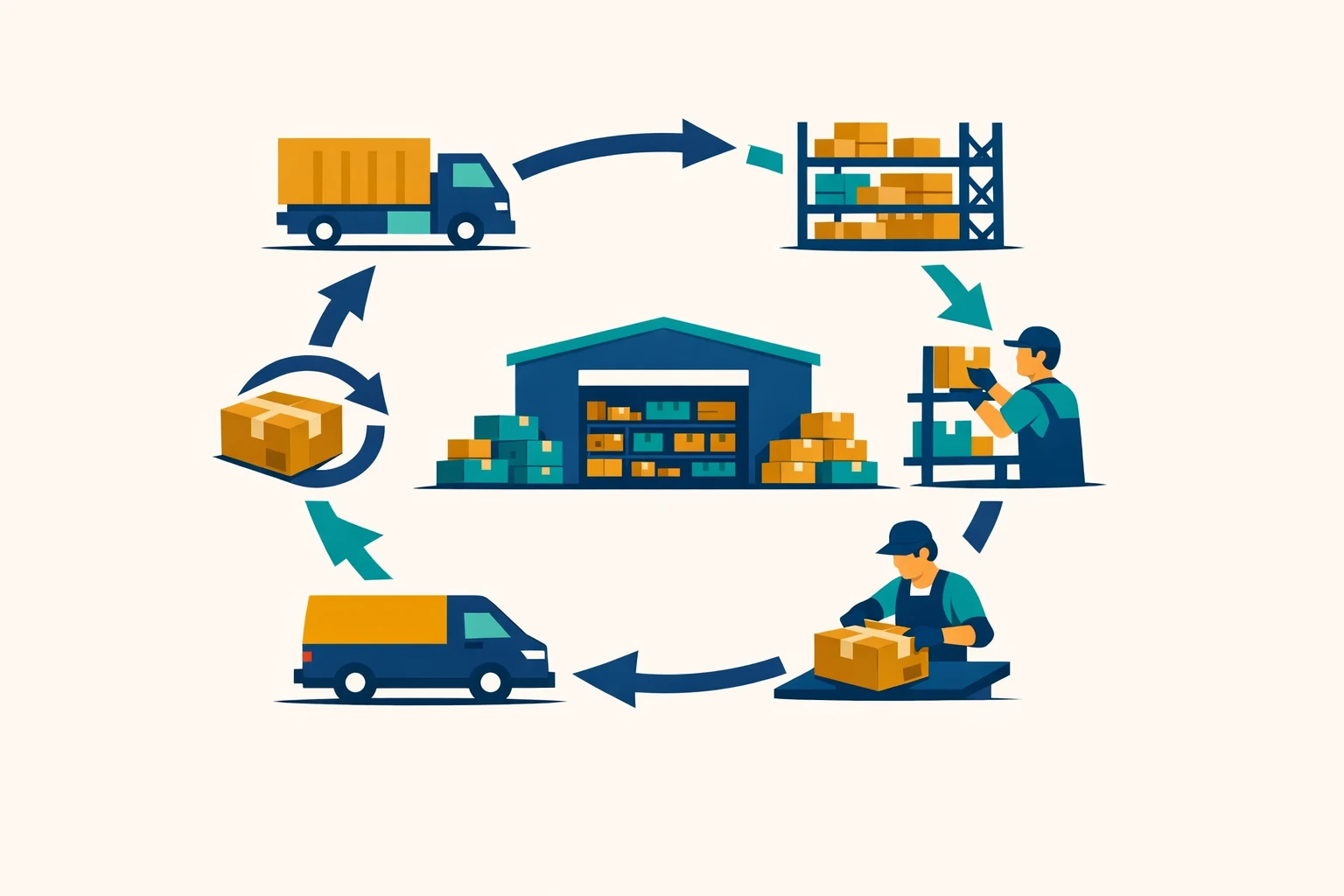
The 6-Step Fulfillment Process
- Inbound: receive and inspect the seller's products at the center
- Storage: store to locations and manage inventory
- Picking: retrieve items when an order comes in
- Packing: pack for shipping (bundling, cushioning)
- Shipping: dispatch via carrier
- Returns: collect, inspect, and restock returned items
When Fulfillment Makes Sense
- When packing and shipping start eating into your core work as orders grow
- When seasonal or promotional swings demand flexible capacity
- When you want to turn fixed storage and labor costs into variable costs
- When you are expanding to new channels or overseas without logistics infrastructure
How Fulfillment Pricing Is Structured
Fulfillment fees are usually a sum of several line items. Compare providers item by item.
- Inbound fee: receiving and inspecting products at the center
- Storage fee: based on location footprint (volume and duration)
- Pick & pack fee: per-order retrieval and packing
- Shipping fee: carrier delivery cost
- Value-added & returns: kitting, and return collection and restocking
In-House vs Outsourced Fulfillment
- In-house: high upfront investment (warehouse, labor, systems), but better unit cost at large, steady volumes
- Outsourced: converts fixed costs to variable and flexes with demand; better for smaller or volatile volumes
This guide is for general information. Actual scope and pricing vary by provider and volume. Confirm with a consultation.
Frequently asked questions
What is fulfillment?
A logistics service that handles the whole e-commerce order process, from storing products to order-level picking, packing, shipping, and returns, so sellers can focus on product and sales.
How is fulfillment different from 3PL?
Fulfillment is a form of 3PL specialized for e-commerce. Where 3PL spans storage, transport, and delivery broadly, fulfillment is optimized for per-order picking, packing, last mile, and returns.
What does the fulfillment process look like?
Six steps: inbound and inspection, storage and inventory, picking, packing, shipping, and returns handling. Once an order arrives, it flows automatically from picking to dispatch.
When should I use fulfillment?
When packing and shipping crowd out your core work, when seasonal swings need flexible capacity, when you want to convert fixed costs to variable, or when expanding to new or overseas channels without infrastructure.

